

Effective Solutions for Atrazine + Mesotrione Formulations in Corn and Sugarcane Weed Control
Introduction: Atrazine and Mesotrione in Vietnam’s Agricultural Conditions Atrazine is one of the most widely used herbicides in Vietnam, particularly in major maize and sugarcane growing regions such as the Central Highlands, Southeast, and North Central provinces. Atrazine effectively controls common weeds such as Digitaria, Echinochloa, Eleusine, and other narrow-leaved grasses that significantly reduce crop […]
Introduction: Atrazine and Mesotrione in Vietnam’s Agricultural Conditions
Atrazine is one of the most widely used herbicides in Vietnam, particularly in major maize and sugarcane growing regions such as the Central Highlands, Southeast, and North Central provinces. Atrazine effectively controls common weeds such as Digitaria, Echinochloa, Eleusine, and other narrow-leaved grasses that significantly reduce crop yield. It acts by inhibiting photosynthesis, preventing weed germination and early growth — making it especially suitable for Vietnam’s tropical monsoon climate and high humidity conditions.
Mesotrione is a new-generation herbicide gaining strong attention among Vietnamese farmers due to its excellent control of resistant weed species. Mesotrione works by inhibiting the HPPD enzyme, causing bleaching and death of susceptible weeds. It is particularly effective against broadleaf weeds such as Ipomoea, Plantago, and Axonopus, which are often tolerant to traditional herbicides. Thanks to its high selectivity, Mesotrione effectively eliminates weeds while remaining safe for crops.
The Atrazine + Mesotrione combination has become a preferred solution among domestic pesticide manufacturers, offering significant synergistic advantages:
-
- Broader weed control spectrum: Effective against both narrow-leaved and broadleaf weeds
- Reduced resistance: Dual modes of action help minimize herbicide resistance
- Cost savings: Fewer spray applications and reduced labor costs
- Better agronomic fit: Ideal for Vietnam’s intensive maize and sugarcane production systems
These formulations are typically developed in two forms:
-
- SC (Suspension Concentrate): Easy to transport and apply
- WG (Water Dispersible Granules): More stable and easier to store under Vietnam’s hot and humid climate
Technical Challenges in Developing High-Content Atrazine Formulations
Developing high-content Atrazine (especially ≥500 g/L SC) presents several formulation challenges:
-
- High viscosity: Inappropriate surfactant systems can cause the product to thicken or solidify during milling.
- Surface drying: A dry film layer may form on the product surface after heat acceleration, leading to phase separation and loss of homogeneity.
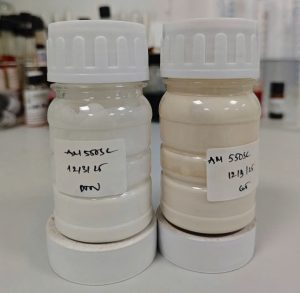
- Color change: Atrazine + Mesotrione formulations may turn yellow after accelerated aging, affecting appearance and commercial value.
To overcome these issues, a polymer-based surfactant system using graft copolymers of maleic and acrylic acids is essential. This unique polymer provides:
-
- Effective particle dispersion
- Inhibition of crystal growth during storage
- Prevention of re-agglomeration or recrystallization after milling
- Optimal and stable viscosity throughout production and shelf life
Comprehensive Solutions from Amigos
Amigos offers a complete range of specialized additive systems developed specifically for Atrazine and Atrazine + Mesotrione formulations:
|
No. |
Product |
Composition |
Function |
Reference Formulation |
|
1 |
Ericol™ 4864 |
Polymer-based surfactant blend |
Effective dispersant, inhibits crystal growth, maintains optimal viscosity during milling |
Atrazine 500 g/L SC |
|
2 |
Ericol™ MESO |
High molecular weight copolymer surfactant (maleic–acrylic acid type) |
Versatile dispersant and wetting agent, suitable for high-content systems and electrolyte-rich environments |
Atrazine 35% + Mesotrione 10% SC |
|
3 |
Tergos® DG 4024 |
Organic sulphonate surfactant blend |
Efficient dispersant and wetting agent, ideal for high-loading formulations, easy to use, and cost-effective |
Atrazine 76% + Mesotrione 12% WG |
Key Highlights of Amigos’ Solutions
- Ericol™ 4864 – Specialized for High-Content Atrazine
-
- Designed for Atrazine 500 g/L SC
- Prevents thickening during milling and surface drying after heat acceleration
- Ensures long-term formulation stability
- Ericol™ MESO – Versatile for Combination Formulations
-
- Suitable for various Atrazine + Mesotrione ratios in SC form
- Excellent solubility in electrolyte or saline environments
- Superior wetting performance for enhanced bioefficacy
- Tergos® DG 4024 – Dedicated for WG Formulations
-
- Optimized for granule dispersion systems (WG)
- Simplifies production and reduces inventory costs
- Improves stability and handling efficiency
Preventing Color Change with Stanox™ AC
A major innovation from Amigos is the introduction of Stanox™ AC, a specialized anti-discoloration agent used in Atrazine + Mesotrione SC formulations. It effectively prevents yellowing after heat acceleration — one of the most common and challenging quality issues.
 |
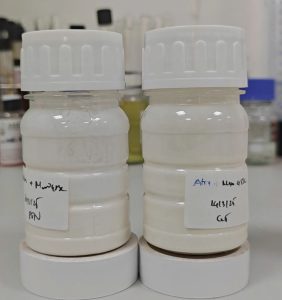 |
| Without Stanox™ AC, Color change | With Stanox™ AC, Color stable |
Practical Benefits:
-
- Maintains the formulation’s characteristic milky-white color
- Enhances visual stability throughout storage
- Ensures consistent appearance before and after accelerated aging
- Increases commercial value and customer confidence
Advantages of Using Amigos Solutions
✓ Outstanding formulation stability – no thickening or surface drying over time
✓ Easy processing – controlled viscosity and optimized grinding performance
✓ Consistent product quality – stable appearance and biological efficacy
✓ Reliable compliance – meets all hot and cold accelerated stability standards
✓ Flexible applications – solutions available for both SC and WG formats
✓ Attractive appearance – anti-yellowing ensures long-lasting color stability
Amigos – Your Trusted Partner in Crop Protection Formulation Development
With extensive experience and advanced additive technology, Amigos is committed to providing effective solutions that help Vietnamese pesticide manufacturers develop high-quality, stable, and competitive products — contributing to higher yields and sustainable agriculture.
📩 Contact Amigos for detailed consultation and customized additive recommendations for your formulation.
Other news
In modern agriculture, advancements in technology and pesticide formulation have driven significant breakthroughs. Among the most prominent trends today is the EW (Emulsion in Water) formulation, which is increasingly gaining market traction due to its superior performance, safety profile, and environmental compatibility. EW Formulation – A Breakthrough Advancement Compared to EC 1. Safety and Environmental […]
1. Sources of ZnO in Vietnam Currently, the Vietnamese market imports four major sources of Zinc Oxide (ZnO) from Thailand, Taiwan, Malaysia, and China. Each source has its own production method, resulting in significant differences in purity, impurity levels, particle size, and application range. This diversity provides fertilizer manufacturers […]

Fenobucarb – A Key Active Ingredient in Vietnam’s Crop Protection Fenobucarb (BPMC) is a carbamate insecticide widely used in Vietnamese agriculture to control pests in rice and various crops. It is one of the most effective active ingredients for managing brown planthoppers, thrips, and other major pests—especially when combined with additional active ingredients. […]
Overview of Metaldehyde Metaldehyde is a widely used molluscicide in Vietnamese agriculture, particularly effective against the golden apple snail (Pomacea canaliculata) – a serious pest on rice and other aquatic crops. Typically formulated at concentrations of 6% – 15% in GR (granules), AB (baits), or RB (ready-to-use baits), Metaldehyde is favored for its cost-effectiveness and strong performance […]
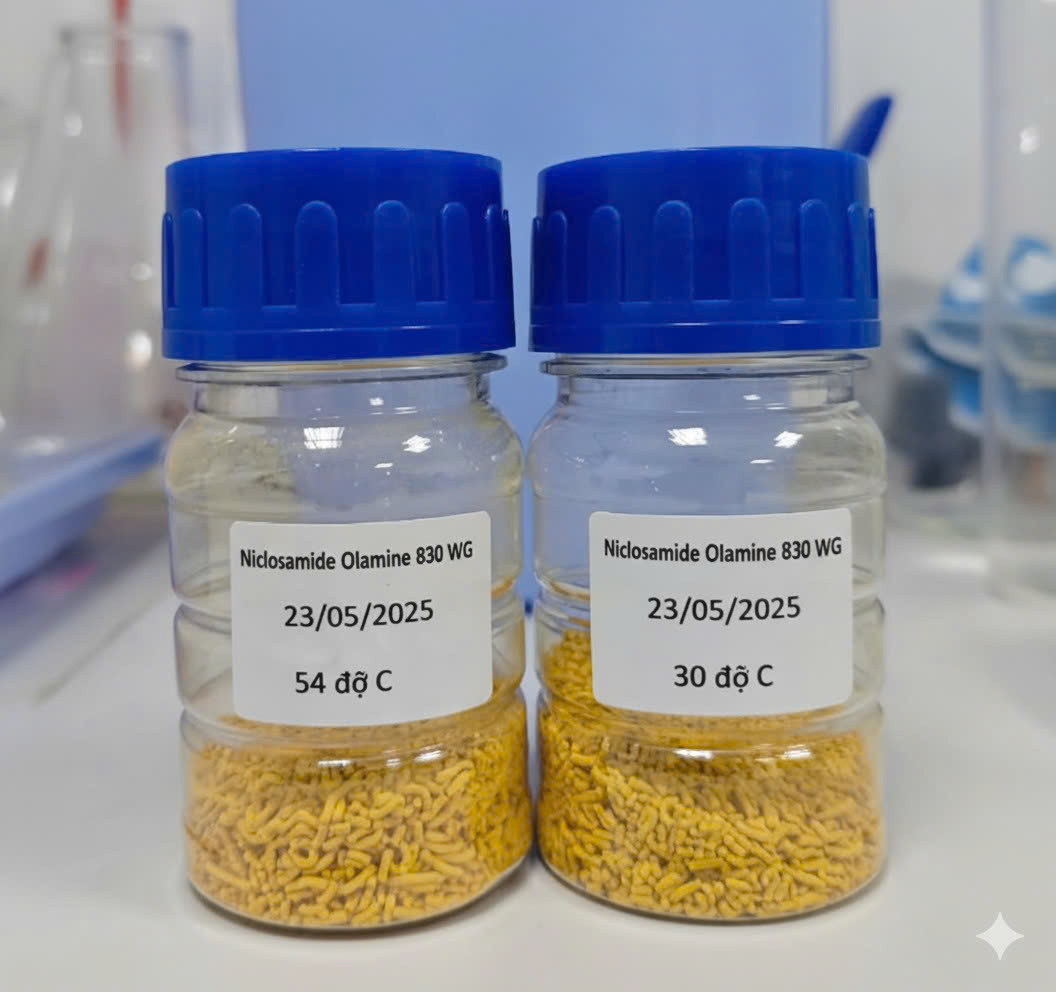
Introduction to Niclosamide and Niclosamide-olamine Niclosamide is a highly effective active ingredient used to control the golden apple snail (Pomacea canaliculata) and is widely applied in Vietnamese agriculture. Niclosamide-olamine, the salt form of Niclosamide, offers better water solubility and easier handling during formulation. Important Conversion Factor According to FAO […]
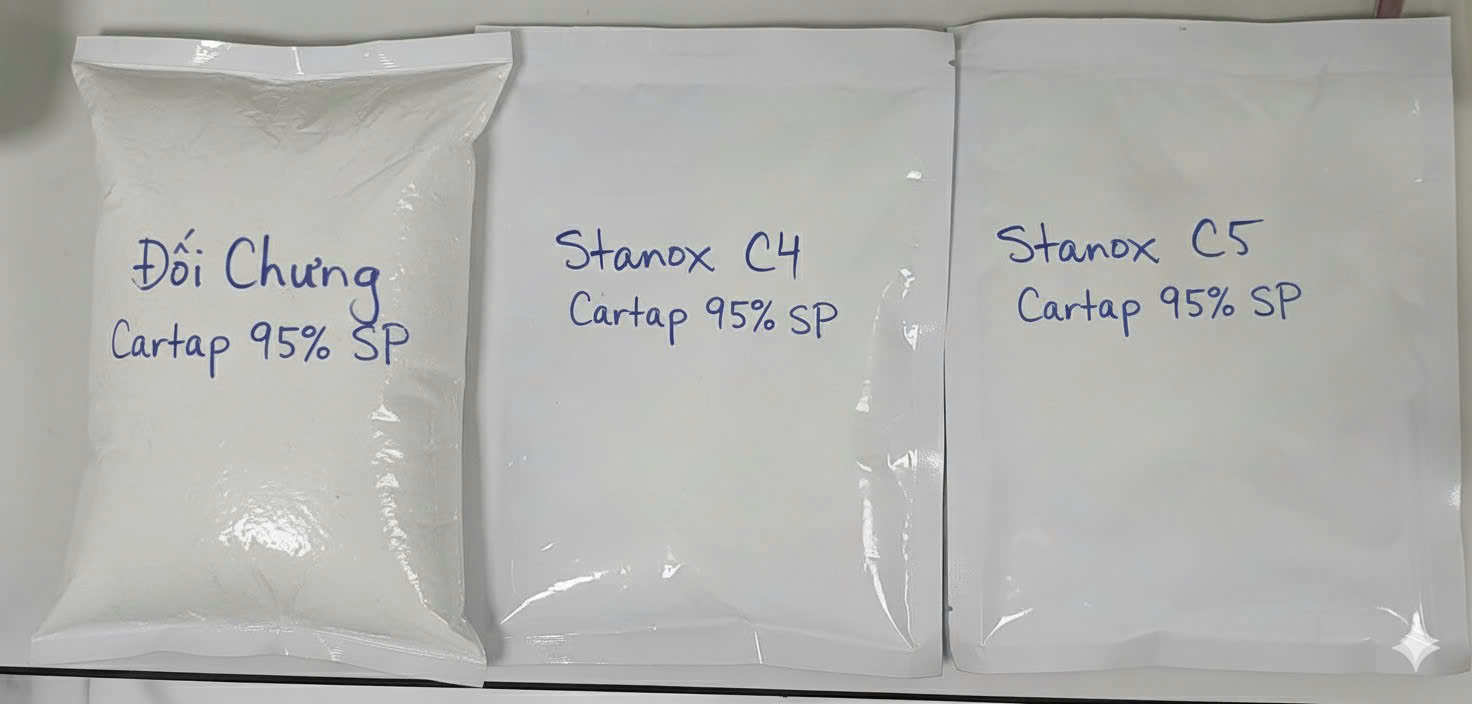
Introduction to Cartap Hydrochloride and Thiosultap-sodium Cartap Hydrochloride and Thiosultap-sodium (Monosultap) are two active ingredients from the Nereistoxin group – an important class of bio-insecticides in agriculture. Derived from the natural toxin of marine worms, these compounds effectively control a wide range of pests on rice, vegetables, and fruit crops. […]